Dive Watches
-
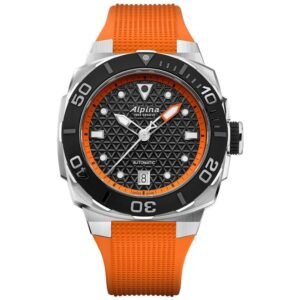
Alpina Seastrong Diver Extreme Automatic AL-525BO3VE6
$2,295$1,606.50 Add to cart -
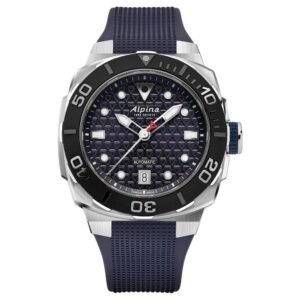
Alpina Seastrong Diver Extreme Automatic AL-525N3VE6
$2,295$1,606.50 Add to cart -
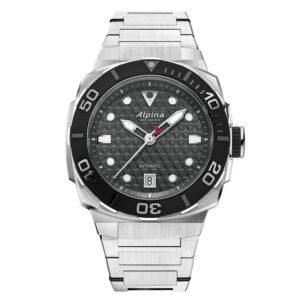
Alpina Seastrong Diver Extreme Automatic AL-525NG3VE6B
$2,495$1,746.50 Add to cart -
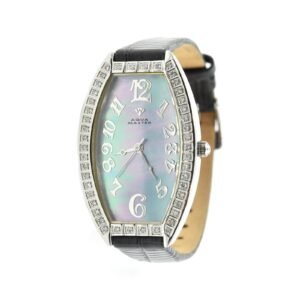
Aqua Master Watch
$400$280 Add to cart -
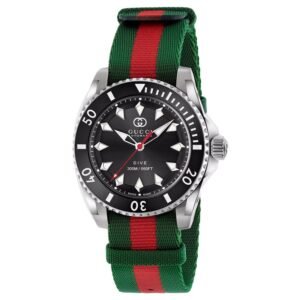
Gucci Dive 40mm Automatic Green Red Nylon 796763
$2,300$1,610 Add to cart -
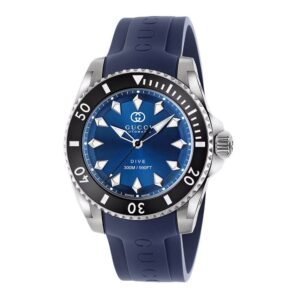
Gucci Dive 40mm Blue Rubber Automatic 796773
$2,300$1,610 Add to cart -
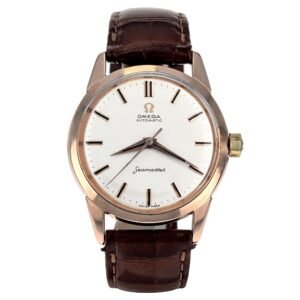
Omega Seamaster Rose Gold
$3,300$2,310 Add to cart -
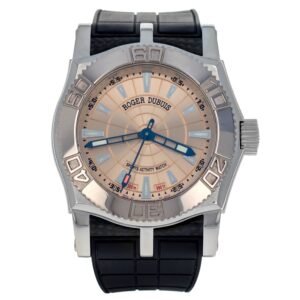
Roger Dubuis Easy Diver
$12,000$8,400 Add to cart -
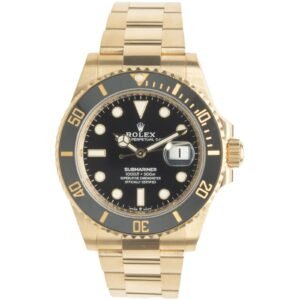
Rolex 18 Karat Yellow Gold Submariner Black / Black 41MM
$53,000$37,100 Add to cart -
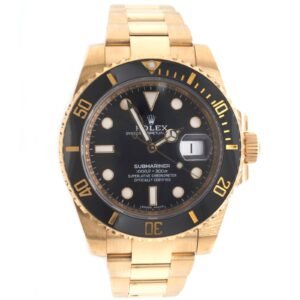
Rolex 18 Karat Yellow Gold Submariner Black/Black
$48,500$33,950 Add to cart -
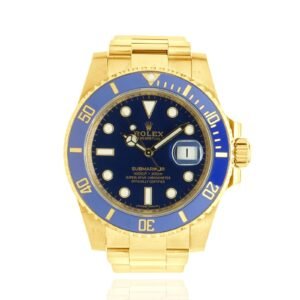
Rolex 18 Karat Yellow Gold Submariner Blue / Blue 40MM
$47,500$33,250 Add to cart -
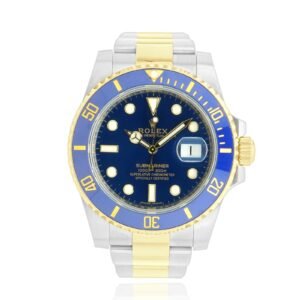
Rolex Stainless Steel & 18 Karat Yellow Gold Submariner Blue/Blue 40
$19,500$13,650 Add to cart
A dive watch is built to stay readable and watertight underwater: a rotating bezel that times a descent, luminous markers that hold in the dark, and a case sealed against pressure. BeepWear lists 67 pre-owned divers, from a $400 everyday steel piece to a $53,000 gold reference, with the middle of the range sitting near $11,800.
What makes a watch a dive watch? Water resistance on its own is not enough. A true diver carries a unidirectional rotating bezel, so a knock can only ever shorten the time you think you have left rather than lengthen it; luminous hands and markers that stay legible in the dark; and a case, crown and caseback sealed to a stated depth. ISO 6425 is the standard that sets out the tests a watch must pass before it can be sold as a diver, covering pressure, condensation, shock, magnetism and the legibility of the minute hand at 25cm in darkness. Plenty of excellent watches are built to the spirit of that standard without carrying the certification, which is why the bezel, the lume and the seals matter more than the wording on the dial.
Which dive brands and models are in stock? Rolex leads the listing with 29 pieces, built around 21 Submariner references and 8 Yacht-Master models. Seiko follows with 18, almost all Prospex divers, including 10 Marinemaster references and a Save the Ocean edition. Ulysse Nardin accounts for 10, among them the Diver X. Alpina contributes 3 Seastrong divers, and TAG Heuer and Gucci are represented as well. That mix is deliberate: the same category holds an entry-level Swiss diver, a Japanese reference collectors follow closely, and a gold sports watch, because all three answer to the same question.
What size dive watch should I look for? This stock runs from 39mm to 44mm, and 40mm is the single most common size on the shelf. A 40mm case suits the majority of wrists and is the traditional diver proportion. Anything from 42mm upward wears large, which is normal for the category but worth measuring first. Case diameter is only half the story: lug-to-lug length decides whether a watch sits inside the flat of your wrist or overhangs it, and a thick diver with a domed crystal can wear heavier than its diameter suggests. If you already own a watch that fits, measure that one and compare.
What do the different price bands get you? Two watches here sit under $2,000, 26 fall between $2,000 and $10,000, another 26 between $10,000 and $25,000, and 13 sit above $25,000. The lower band is mostly Japanese and entry Swiss steel, where you are buying a well-made tool watch. The middle band is where the steel sports references from the established Swiss houses sit. Above $25,000 you are usually paying for precious metal, a scarce reference, or both, and the watch is as much an asset as an instrument.
What should you check on a pre-owned diver? Turn the bezel through a full rotation and listen: it should click firmly in one direction only, with no slack at the zero marker. Look across the crystal at an angle for hairlines and chips. Screw the crown down and feel for grit or cross-threading, which is the most common cause of a flooded case. Check whether the bracelet has stretched at the links, since that is wear you cannot polish out. Ask about the lume: older tritium and early luminous compounds fade, which collectors often prize but buyers expecting brightness will not. Box, papers and service records raise value, and their absence should be reflected in the price rather than glossed over.
Can you dive with a pre-owned watch? Not on the strength of its original rating. Gaskets harden with age, crystals pick up hairline damage, and crown threads wear, so water resistance on any older watch has to be re-tested by a watchmaker before it goes near the sea. That is a cheap test and worth doing annually if you actually swim in the watch. Every BeepWear diver is inspected before listing, but an inspection is a condition check, not a pressure test, and we do not present it as one.
How often does a dive watch need servicing? A mechanical diver is usually serviced every 5 to 10 years depending on the maker, and a service includes replacing the gaskets and re-testing pressure as well as cleaning and regulating the movement. A watch that has sat unworn for years is not exempt: oils settle and dry whether or not the watch has been running. If a listing carries a recent service record, that is real money already spent on your behalf.
How does BeepWear list and ship these? Every watch is pre-owned, inspected before it is listed, and photographed as the actual item you will receive rather than a stock image. Stock is one of a kind, so a sold listing comes down. Orders ship insured within the United States, and the authenticity guarantee, returns policy and warranty terms are each set out on their own page rather than buried in small print.